


Pony World Craft
4.3660.00 Reviews
App Specs
- Version
- 1.5.91
- Updated On
- License
- Free
- Downloads
- 10,000,000+
- Developer
- Candy Room Games & RabbitCo
- Categories
- Arcade
- Platform
- Android
Screenshots
 Analysis by AppCompare
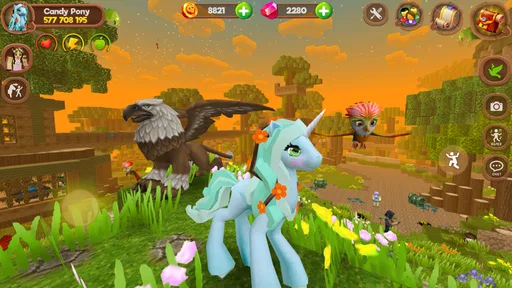
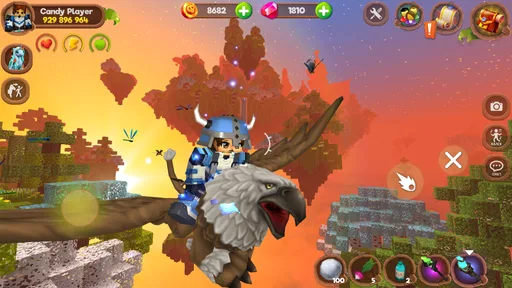
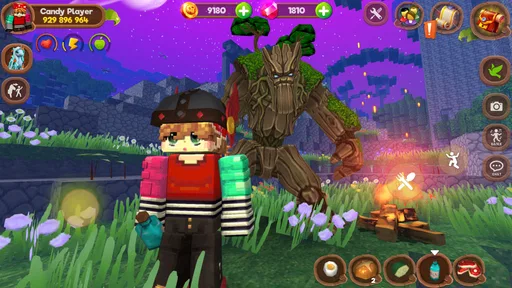
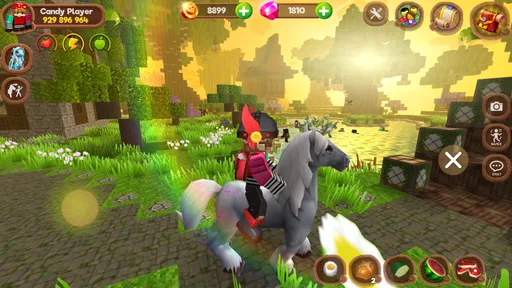
I approached Pony World Craft expecting a light arcade game with a fantasy theme, but I found something closer to a relaxed creative playground built around ponies, exploration, and small discoveries. It is free to play, made by Candy Room Games & RabbitCo, and its appeal comes less from intense competition than from the feeling of having a colorful world to wander through at my own pace.
That distinction matters. If you are looking for a fast arcade challenge with short reaction tests, strict leaderboards, or a constant stream of escalating difficulty, this may not be the best fit. If you enjoy fantasy settings, playful movement, and games that let you spend a few quiet minutes exploring rather than chasing a perfect score, it has a more convincing case.
The game sits in the arcade category, although I would describe its experience as an arcade-flavored fantasy world rather than a traditional score-attack title. The store summary presents it as an adventure fantasy world, while the short description identifies the central idea simply as Pony World Craft. In practice, I found that the combination of exploration and creative freedom is more important than the label.
How the current version feels to play
The current version is 1.5.91, and the game has been available since April 27, 2018. That gives it a more established feel than a newly launched experiment. It has had time to settle into its identity, and I did not get the impression that it was trying to copy every new trend in mobile gaming. Its personality is straightforward: enter a cheerful fantasy environment, move around, interact with the setting, and decide what kind of session you want.
My favorite way to play is to treat each visit as a small break rather than a long campaign. I might explore for a while, look for an interesting area, and then stop when the environment starts to feel familiar. This makes it useful on a short commute or during a pause between tasks. It does not demand the same concentration as a competitive arcade game, so I can play without feeling that every interruption ruins a carefully planned attempt.
The pony theme also gives the world a softer tone than many arcade games. The presentation is aimed at players who enjoy fantasy animals and bright, approachable settings, but it is not limited to very young children. The content rating is Everyone 10+, which feels like a useful signal for families deciding whether the tone is suitable for a particular player.
One practical point is device compatibility. The game requires Android 6.0 or later, so it is accessible on a broad range of Android devices, although the experience can still vary depending on how old or modest the phone is. I would close other demanding apps before playing on an older handset, especially if the game begins to feel less responsive during longer sessions.
Worth Reading Before You Choose

EA SPORTS FC Mobile 26 Is a Bigger Football Game, but It Takes Time

Flipboard Shows What News Apps Must Do Beyond the Feed

Switching to Android Auto Means Rethinking Your Driving Routine

Google Calendar Makes a Crowded Week Easier to Manage

Ludo King Makes the Most of the Minutes Between Plans

Baby Panda World Brings Quick Play to Modern Phones, but Its Game Library Feels Busy
The audience size suggests that this is not an obscure one-week release. It has passed ten million installs and holds an average rating of 4.3 from around thirty-seven thousand ratings. I would not treat those figures as proof that everyone will enjoy it, but they do indicate that the basic idea has connected with a substantial Android audience.
Exploration works better than rushing
The most useful change in mindset is to stop expecting every moment to provide a reward or a dramatic objective. The world is easier to appreciate when I slow down and observe how different spaces are arranged. Instead of immediately trying to cover every area, I recommend choosing one direction, learning the nearby surroundings, and then returning to places that seem worth revisiting.
This approach also helps with orientation. In a colorful fantasy environment, different areas can begin to blend together when I move too quickly. I found it easier to remember landmarks by using a simple mental route: start from a familiar point, explore one branch, and return before taking another. It sounds basic, but it prevents aimless wandering and makes the world feel more manageable.
A second useful habit is to separate exploration from experimentation. During one visit, I focus on seeing what the environment offers. During another, I test movement and interactions more deliberately. Trying to do both at once can make the game feel less clear, while treating them as separate activities gives each session a purpose.
What the developer’s updates mean in practice
The version history represented by 1.5.91 tells me more about the game’s maturity than about a dramatic redesign. I would approach it as an established experience rather than expecting a completely different game every time it is updated. That is a positive if you already like its relaxed fantasy direction, because the core identity remains easy to understand.
For existing players, the main benefit of staying current is simple: the latest version is the sensible baseline for judging the game today. I would not compare a present session too closely with an old memory of the game, especially if you played years ago on a different phone. Device performance, familiarity with the controls, and your expectations can change the experience as much as the game itself.
New players should also give themselves time to adjust before deciding whether it is worth keeping. The first session may feel slower than expected if you arrive from a more conventional arcade game. I would play long enough to understand the rhythm of moving through the fantasy world before judging it solely by its opening minutes.
There is a useful trade-off here. A stable, recognizable design can be comforting, but it may also feel less exciting to players who want constant novelty. Candy Room Games & RabbitCo appears to be serving the former audience more effectively: people who want a dependable, whimsical world rather than a game that continually reinvents its rules.
Who will get the most from it?
I think the strongest match is a player who likes casual fantasy exploration and does not need a rigid mission structure to stay interested. It can work for someone who enjoys creating personal goals, such as finding a new route, spending time in a favorite area, or simply seeing what happens when they approach the world differently.
It is also a reasonable choice for families who want a free game with a friendly theme, provided the player is comfortable with the Everyone 10+ rating. I would still let younger players try it with normal family supervision, not because the premise sounds harsh, but because age ratings are more useful when considered alongside a child’s individual sensitivity and gaming habits.
For an everyday example, imagine having fifteen minutes before an appointment. A competitive arcade game might encourage you to start a serious run, only for the session to end just as you become focused. Here, I can enter, explore a nearby section, and stop without feeling that I have abandoned a complicated plan. That makes it a better companion for fragmented free time than games built around long, uninterrupted attempts.
It can also suit players who are tired of aggressive monetization pressure, although I would not assume that “free” automatically means frictionless. The lack of an upfront price makes trying it easy, but every free mobile game deserves the same practical caution: check how the experience feels on your device and whether its pacing matches your expectations before committing time to it.
Where it differs from familiar arcade alternatives
Compared with a classic endless runner, Pony World Craft is less about reacting instantly to obstacles and more about inhabiting a setting. An endless runner gives me a clear loop, an obvious score, and a reason to repeat the same challenge. This game offers a looser loop, so the reward comes from discovery and atmosphere rather than from improving a number after every attempt.
Compared with a conventional sandbox game, it feels more approachable and less demanding. A large sandbox can offer deeper systems, longer projects, and more complex planning, but it may also require more time before the world becomes satisfying. Pony World Craft is easier to pick up when I want a smaller-scale fantasy escape, though players seeking extensive construction or highly detailed simulation may find the experience too light.
It also differs from story-driven adventure games. A narrative adventure tells me what the next emotional or dramatic objective is, while this game leaves more room for personal pacing. That freedom is its strength when I want to play casually, but it becomes a weakness if I need strong character development, carefully staged quests, or a plot that keeps pulling me forward.
The key trade-off is freedom versus direction. I enjoy the freedom when I am in the mood to wander, but I would choose another arcade title when I want immediate goals, quick failure-and-retry cycles, or a clearly measured sense of progress.
Small habits that improve the experience
My first tip is to avoid judging the game by how quickly it delivers excitement. Give the environment a little attention instead. Look for routes that seem visually distinct, use familiar landmarks to build a mental map, and let curiosity—not completion anxiety—decide where to go next.
My second tip is to keep sessions intentionally short at first. A brief visit makes it easier to tell whether the game’s relaxed rhythm suits you. If you begin with a long session and become bored, you may be reacting to fatigue rather than to the game’s actual strengths.
My third tip is to treat the game as a flexible activity rather than a single challenge. On one day it can be a quiet exploration game; on another, it can be a playful setting for testing movement and discovering new corners. That change in purpose helps prevent the experience from feeling repetitive too quickly.
Finally, I recommend testing it on the device you plan to use regularly rather than assuming that broad Android compatibility guarantees identical performance everywhere. Android 6.0 support makes installation possible on older systems, but the age of the operating system is only one part of the experience. Screen size, available storage, background apps, and general device condition can all affect how comfortable a game feels.
Limitations that are easy to overlook
The relaxed design will not satisfy everyone. I sometimes wanted a clearer reason to continue exploring, especially after I had become familiar with a particular area. Players who need frequent objectives may interpret the open-ended structure as a lack of content, even if the intention is to encourage free play.
The arcade classification may also create the wrong expectation. Someone downloading it for rapid reflex challenges could be disappointed by the slower, more exploratory rhythm. I would not recommend it as a replacement for a high-energy arcade favorite. It belongs closer to the gentle side of the category, where the setting and freedom matter as much as mechanical intensity.
There is another limitation for returning users. If you played it before and are hoping for a completely transformed experience, the current version may not provide the kind of reset you imagined. Its appeal depends on whether you still enjoy the original fantasy concept, not on the promise of a new genre hidden inside an update.
That is why I would skip it if your priorities are competitive rankings, elaborate long-term progression, a deep narrative, or a highly technical building system. Those are reasonable preferences, but they point toward different types of games. This one is more successful when the player accepts its lighter ambitions.
What I would watch as a returning player
When I revisit a game like this, I pay attention to whether new versions improve comfort without losing the simple identity that made the game appealing. For Pony World Craft, I would watch how well the current version continues to serve short sessions, how smoothly it runs across older Android devices, and whether exploration remains inviting after the first novelty fades.
I would also watch for signs that the world gains useful reasons to revisit without becoming cluttered with obligations. The ideal direction would preserve the easygoing fantasy atmosphere while giving experienced players a few more meaningful discoveries. That is a delicate balance: too little structure can make the game feel empty, while too much can turn a relaxing playground into a checklist.
Existing users should approach updates with realistic expectations. A version number can show that the game is being maintained, but it does not automatically mean that every personal complaint has been addressed. I would install the current release, spend time with the parts I originally enjoyed, and then decide whether the overall fit has improved for my own habits.
New users should do the opposite: start with no assumption that it must behave like a standard arcade game. Enter it as a fantasy exploration experience with arcade roots. That framing makes its strengths easier to notice and its limitations less surprising.
My recommendation after spending time with it
Pony World Craft is a pleasant choice for players who want a free, approachable fantasy world they can visit without intense pressure. I like its willingness to be gentle and open-ended, and I think the pony theme gives it a distinct personality instead of making it feel like another anonymous arcade release.
Its 4.3 average from around thirty-seven thousand ratings and its audience of over ten million installs suggest that the concept has broad appeal, but I would still make the decision based on your preferred style of play. Popularity cannot turn a loose exploration game into a competitive arcade challenge, and that difference is the most important thing to understand before installing it.
For me, the game works best as a short-session escape: a place to explore when I want color, fantasy, and freedom without a demanding objective. I would recommend it to casual players, families considering a Everyone 10+ title, and anyone who enjoys making their own small goals. I would point action-focused players toward a faster arcade alternative, and I would steer serious sandbox fans toward a deeper creative game.
Because it is free and supports Android 6.0 or later, the barrier to trying it is low. My advice is to give it a calm first session, explore rather than rush, and decide whether the world itself keeps you curious. If it does, the current version offers a simple and friendly place to return to; if it does not, the game’s lack of strong direction will probably remain the reason it fails to hold your attention.
Pros
- Creative sandbox lets you build and decorate your own pony world.
- Cute pony-themed visuals are appealing to younger players.
- Exploration offers a relaxed experience without intense combat.
- Simple controls make it accessible for children and casual players.
- Character and environment customization encourages personal expression.
Cons
- Some features may require in-app purchases or additional resources.
- Repetitive tasks can make progression feel slow over time.
- The colorful graphics may run less smoothly on older devices.
- Limited challenge may disappoint players seeking complex gameplay.
- Ads or promotional prompts can interrupt the overall experience.
FAQs for Pony World Craft
What is Pony World Craft?
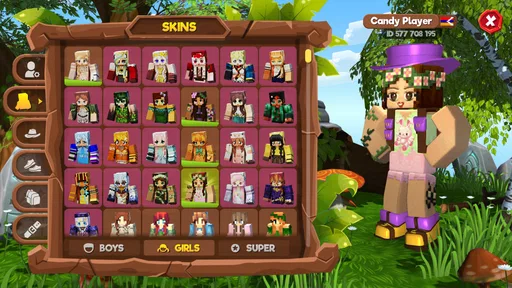
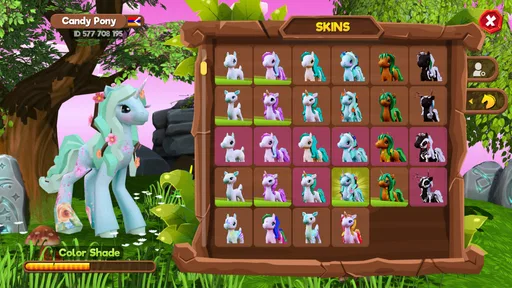
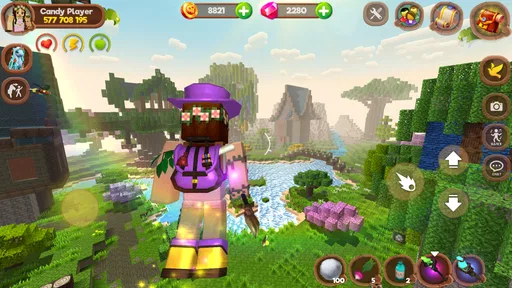
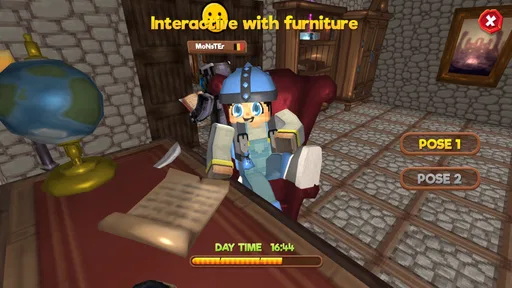
Pony World Craft is a casual sandbox-style game centered on colorful pony characters, exploration, creativity, and simple building activities. Players can typically move through bright, block-inspired environments, interact with objects, customize their character, and complete playful activities. Its relaxed presentation makes it suitable for users who prefer open-ended entertainment rather than a demanding competitive or story-driven experience.
Can I play Pony World Craft offline?
Pony World Craft may allow some gameplay without a constant internet connection, especially when exploring available worlds or using basic offline features. However, connectivity can still be required for advertisements, updates, online content, account-related functions, or downloading additional resources. Before relying on offline play, it is worth testing the game after disabling Wi-Fi and mobile data on your device.
Is Pony World Craft suitable for children?
The colorful visuals, simple controls, and friendly pony-themed design make Pony World Craft appealing to younger players. Nevertheless, parents should review the game themselves because age suitability can depend on advertisements, in-app purchases, chat or social features, and the amount of supervision required. Using parental controls and disabling unauthorized purchases is recommended when children play.
Does Pony World Craft contain ads or in-app purchases?
The availability of advertisements and optional purchases can vary according to the version, device, region, and developer settings. Free mobile games commonly use ads to support development, while purchases may unlock items, remove advertising, or provide additional content. Check the store listing before downloading, and review purchase permissions carefully so unexpected charges do not occur.
What devices are compatible with Pony World Craft?
Compatibility depends on the operating system version, available storage, hardware performance, and the specific release offered through the Android or iOS store. A device with updated software and sufficient free space should provide the best experience, although older phones may experience slower loading or reduced performance. Always check the official store page for current requirements before installing.


